
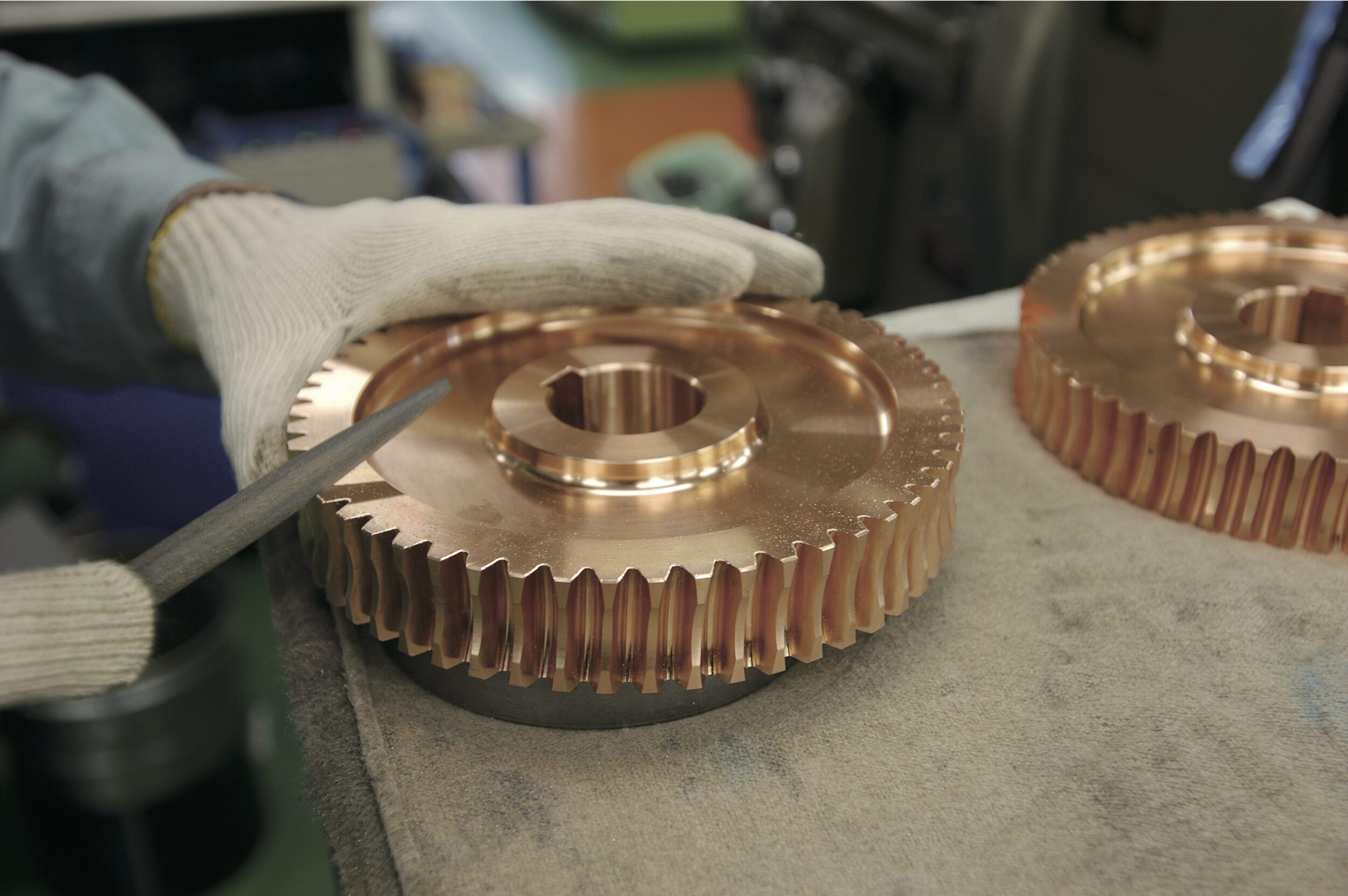
Gears sit at the heart of mechanical engineering they’re what let machines transfer power and motion without losing much along the way. And every well-cut gear owes its shape to one specific tool: the gear shaper cutter.
What Exactly Is a Gear Shaper Cutter?
A gear shaper cutter is built specifically to cut internal or external gear teeth. Unlike hobbing or milling, it works through a vertical, piston-like stroke against the workpiece, timed precisely with the gear’s rotation. That timing is what makes shaping so effective for gear geometries that other cutting methods just can’t handle cleanly.
Most shaper cutters are made from HSS or carbide, chosen based on the machine and the material being cut. Since a cutter’s profile is essentially the mirror image of the gear it produces, getting the design and build right calls for a serious level of precision.
One thing that makes shaper cutters especially useful is their flexibility they can cut teeth right up against shoulders in a way few other tools manage. That’s a big reason this method is trusted for keeping the cutting action tightly controlled from start to finish.
How the Generating Process Works
Gear shaping is often described as a generating process because of the continuous rotational motion running through it. The tool and the workpiece behave almost like a meshed gear pair, their speeds tied together by a fixed tooth ratio. As the tool strokes back and forth, a rolling action along the pressure lines gradually builds the full gear profile, with radial feed guiding everything toward the final shape.
On the return stroke, the tool lifts away from the gear through a built-in relieving mechanism this keeps it from scraping the tooth flanks and leaving marks. As the tooth height gets closer to spec, the distance between tool and gear is fine-tuned step by step until the geometry matches what’s required.
The Different Types of Gear Shaper Cutters
Not all shaper cutters are built the same the type depends on the gear being produced. Disk-type cutters typically handle external gears, hub-type cutters take care of internal ones, and shank-type or helical shaper cutters step in for more complex shapes. Depending on how demanding the application is, these can be standard off-the-shelf tools or fully custom-built.
Semi-topping and topping cutters add another variation they modify the tip of the gear tooth to improve fit and cut down on interference. Which type ends up being used usually comes down to the module, pressure angle, and whether the gear is straight-cut or helical.
Where Precision Really Counts
Industries like automotive, aerospace, robotics, and heavy machinery lean heavily on gear shaping because precision simply can’t be compromised. Even a slight error can mean faster wear, weaker performance, or in the worst cases, total failure. That’s why shaper cutters are built to hold tight tolerances and keep performing reliably through thousands of cycles.
The Manufacturing Methods Behind Gear Shaping
Gears are everywhere in modern machinery, and shaping cutters play a big role in keeping that production accurate. A few different methods come into play here:
Gear cutting and shaping one of the most common approaches, where shaper tools are built into machines that cut teeth on both the inside and outside of a gear, keeping everything evenly spaced and standards-compliant.
Gear hobbing a faster, more advanced method that uses specialized rotating tools to cut gear grooves with clean precision, often at a much quicker pace than older techniques.
Gear milling a more budget-friendly alternative to hobbing that still delivers solid speed, using multi-edge tools to shape evenly spaced teeth.
Where Gear Shaping Is Heading
As gear-shaping equipment becomes more automated, the process keeps getting more efficient and repeatable. There’s growing demand for cutters that can keep up with higher speeds and tougher applications, and ongoing improvements in cutter materials, design, and coatings are pushing tolerances tighter and costs lower.
Wrapping Up
Gear shaper cutters are quietly essential to gear manufacturing, combining precise engineering with smart material choices to keep demanding industries running well. As manufacturing keeps evolving, these tools remain foundational to how gears get made — one precise cut at a time.
FAQs
How do gear shaper cutters differ from hobbing and milling tools?
Shaper cutters cut one tooth at a time using a back-and-forth motion, which makes them well-suited for internal gears and low tooth counts. Hobbing uses a continuously rotating tool to cut several teeth at once, making it faster for high-volume external gear production. Milling, meanwhile, cuts each tooth individually in a start-stop fashion — better for smaller runs or larger custom gears where speed isn’t the top priority.
What materials go into gear shaper cutters?
Mostly HSS or carbide, chosen based on what the gear is made from and the machine being used.
What types of gear shaper cutters are out there?
Disk-type for external gears, hub-type for internal gears, helical cutters for more complex shapes, and semi-topping/topping cutters for tooth modifications.
Why does precision matter so much here?
Because even a small error can cause premature wear or failure in high-stakes applications like automotive, aerospace, robotics, and heavy machinery.
How are these tools evolving?
Through better cutter designs, improved materials, advanced coatings, and closer integration with automated, high-precision gear-shaping machines.
Which industries rely on gear shaper cutters most?
Automotive transmissions, heavy industrial machinery, aerospace, defense manufacturing, and planetary gearboxes all depend on them. At S.S. Tools, we build shaper cutters designed to meet the strict tolerances these industries demand.
Can gear shaping handle both internal and external gears?
Yes — it’s one of the more versatile machining methods out there, working well for both internal and external spur and helical gears, especially where hobbing tools can’t clear the flange.