
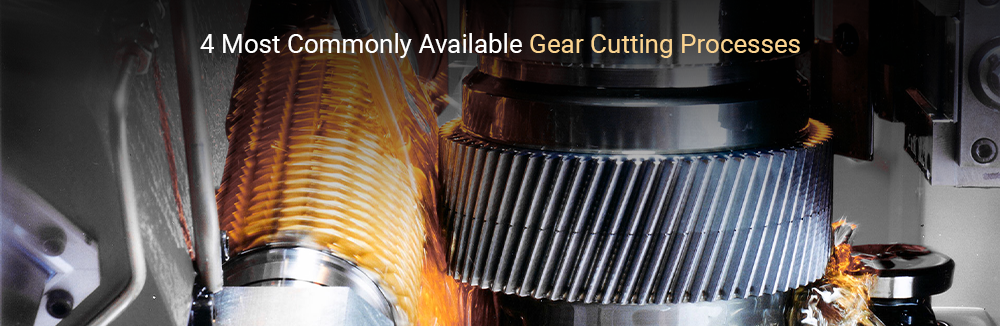
The shaping cutters are very well available across the industry and are very easily utilized to achieve the overall goals of cutting the gears. Several kinds of companies are taking great pride in machining the processes where the gear cutting has been done in the most precise manner. Some of the common gear-cutting processes include broaching, hobbing, milling, and several other things, and it is very much important for the companies to perform each of the processes correctly and perfectly so that overall goals are efficiently achieved. The best possible way of cutting various kinds of spur and helical gears is to utilize the gear cutting hobbing machines. The gear cutting and hobbing are considered to be those particular things that can be done quickly and perfectly in case the right kind of machines will be utilized. The gear cutting can be used where the projects require a very quick turnaround time. Some of the companies are very much successful in providing a fast turnaround time for the businesses so that they can avail all the best possible benefits associated with the whole process.
Following are some of the most common gear-cutting processes:
The broaching process: This is considered to be the spline or vertical broach-based process, which is utilized in cutting very large kinds of gears. It is very good for creating the tooth shape of a gear, and these kinds of machines and cutters produce the largest gears. This particular process is quite expensive, but it is very much successful at the time of producing the massive volume gears.
The gear hobbing process: This particular method is the comprehensive method of cutting the gears with the help of using the hobs. The whole thing must be added from one revolution to another so that every tooth of a particular gear can be created. This particular method is utilized for all kinds of products and sizes and is considered ideal for medium to larger ones.
The milling or grinding process: This particular method utilizes a proper milling machine along with a grinder. It is very well utilized in producing the helical type of gears. The best part is that this particular process is very accurate and flexible, which makes it very much popular among the people to be used.
The gear shaping process: This is considered to be one of the most convenient ways of implementing the gear cutting procedures. This particular process is done with the continuous same plane rotational cut of the gear.
All the processes are very much successful in utilizing the best possible state of technology and making sure that the best possible materials are utilized throughout the processes. Whenever the above-mentioned procedures will be implemented by any of the company they will be witnessing the benefits of accuracy as well as efficiency throughout the manufacturing process, which is the main reason that they will be able to produce the best quality gears all the time.
Hence, the gear shaper cutter is a very important tool that can be utilized by the companies to produce the gears.
FAQs
1. Why are shaping cutters commonly used in gear cutting processes?
Shaping cutters are easily available and effective for precise gear cutting. They help achieve accurate results across different gear manufacturing goals.
2. What are the most common gear cutting processes used in manufacturing?
Common processes include broaching, hobbing, milling or grinding, and gear shaping. Each method is used based on gear size, type, and production requirements.
3. When is the broaching process used in gear cutting?
Broaching is used for cutting very large gears with defined tooth shapes. It is suitable for mass production but is relatively expensive.
4. Why is gear hobbing preferred for spur and helical gears?
Gear hobbing allows fast and accurate cutting of spur and helical gears. It is ideal for projects requiring quick turnaround times.
5. How does the gear shaping process work?
Gear shaping uses continuous rotational cutting on the same plane. It is a convenient and efficient method for producing accurate gears.