
A Small Number on a Drawing Can Make or Break a Gear
Ask any production head who has dealt with a rejected batch and they will usually say the trouble did not start on the shop floor. It started with a spec sheet nobody read closely enough. Although both seem to be typical quality marks, a drawing marked DIN 6 and one stamped AGMA Q6 have entirely distinct meanings. Knowing what these codes promise impacts whether manufacturing runs smoothly or results in a costly rework cycle for anybody sourcing gear cutting equipment in India or exporting finished gears abroad.
What DIN and AGMA Actually Say
DIN 3961 and DIN 3962 come from Germany and grade accuracy from DIN 1, extremely tight and used for master gears, down to DIN 12, coarse and low cost. Lower number means finer precision. The bulk of industrial gearboxes range between DIN 5 and DIN 8. AGMA functions in the opposite way.
Where Indian Manufacturing Fits
India does not run its own separate grading system. The Bureau of Indian Standards has published references like IS 4460 for load capacity, but for tooth accuracy itself, most Indian workshops and gear cutting tools manufacturers like SS Tools still work to DIN or ISO 1328 grades, quoting AGMA equivalents only when a client asks for the US market. We list both sets of numbers on one report so a single batch clears a German buyer’s check and an American purchase order without confusion.
A Quick Comparison
| Standard | Scale Direction | Typical Range | Common Region |
| DIN 3961/3962 | Lower is finer | DIN 5 to DIN 8 | Europe, widely used in India |
| ISO 1328 | Lower is finer | Grade 5 to Grade 8 | Global |
How This Decides the Tool You Need
The target accuracy grade largely decides which tool does the job.
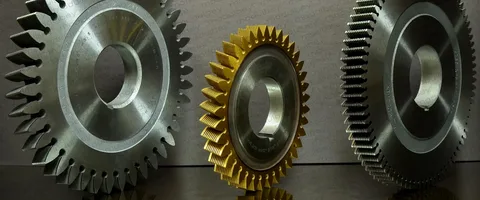
- Gear Hobs suit medium to high volume production of spur, helical, and spline gears, holding DIN 6 to DIN 8 in a single pass on a CNC machine.
- Gear Shaper Cutters come in when internal gears or shouldered geometries rule out hobbing.
- Gear Shaving Cutters finish a roughed gear, moving it from DIN 8 down to DIN 6 or finer by correcting errors cutting leaves behind.
Picking the wrong tool for a target grade is one of the more avoidable reasons behind gear noise and early wear.
Getting the Spec Right the First Time
Before producing a design, find out which standard the end customer checks against, if your gear cutting tool supplier can attest to it, and whether the grade you desire is genuinely necessary rather than simply a habitual duplicate of an old drawing. At SS Tools, we understand the requirements of our clients specifically and fulfill their needs with perfection. While demanding too little accuracy nearly guaranteed returns later, requesting greater precision than the task needed gradually increases up prices.
A Few Real World Questions
Is DIN 6 better or worse than AGMA 10?
They land in roughly the same place. The confusion comes from the direction of the scale, not the actual tolerance.
Do Indian gear manufacturers need AGMA certification to export to the US?
Not always as a formal certificate, but American buyers expect AGMA equivalent figures on the report, so manufacturers convert their DIN or ISO numbers.
What happens if the wrong standard gets specified?
At best it causes confusion at inspection. At worst, gears meeting one standard get rejected against another, leading to delays and disputes over who pays.